Friday, December 31, 2010

California Dreamin' – Hearst Castle


A North Carolina Cottage

While today there is an emphasis on smaller, greener living spaces with mini-ecological footprints that appeal to more energy-conscious buyers, such concerns did not exist in William Randolph Hearst's day. It would take 1,407 of these 64-square foot North Carolina cabins to fill up Hearst's estate.

In fact, the media magnate, who was so obviously not in the forefront of the small-house-movement, spent decades overseeing construction of his gigantic 90,080 square foot estate with its four main buildings containing 56 bedrooms, 41 fireplaces, 61 bathrooms, 19 sitting rooms, and two libraries.

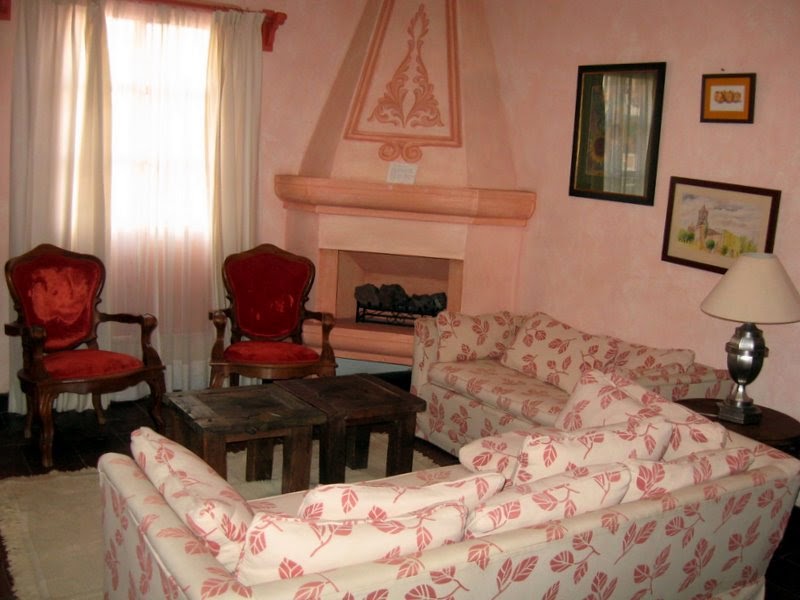
One of the many guest rooms.
So his guests would not tire of the accommodations, there were also extensive gardens planted with 6,000 rosebushes (Because Hearst couldn't stand watching them, the gardeners worked only at night.) and a 2,000-acre zoo—once the country's largest.

Tuesday, December 7, 2010

California Dreamin' – Highway 1, Pacific Coast Highway

A passerby balanced the stones just-so in the photo above, but that's the only place you'll see mankind's touch along this wild road that clings to steep hillsides, whips around impossible curves, and sweeps down to the coastline every now and then so the driver can catch his breath and relax his grip on the steering wheel.

This ribbon of two-lane road that stretches along the California coast deserves a more descriptive name than Highway 1. The asphalt traverses a land of stunning beauty and rugged appeal where only the birds and the sea lions seem at home. It may not be The Most Beautiful Drive in the World (The Amalfi Coast and the French Riviera come to mind.), but it is truly one of the most impressive in North America.
Plan to drive slowly, about 35 mph (56 kilometers), to savor the landscape. You'll want to take photos at every pull-out spot along the road. You'll wonder about the engineers who created this highway and notice that even the bridges seem to float between the cliffs. And when you get to the end, you'll want to turn around and do it all over again.
Seals rest on the beach
Practicalities -
Do not plan to scurry down this road because it's impossible even if you're in a hurry—the traffic moves slowly. Set a leisurely pace to truly enjoy the ride.

The bakeshop/restaurant in Big Sur serves wonderful food and the rustic ambience is fitting for this remote, rugged land, but it's somewhat difficult to find. If you see the post office, though, you're close. Find a place to park and walk up the hill a little way to the restaurant complex.

Monday, December 6, 2010

Tightwad Travel Tip - TSA Search Engine

Will the TSA allow a container with more than 3.4 ounces of liquid in my 3-1-1 plastic bag if the liquid is contact lens fluid? What about carrying extra batteries in my camera case?  Is it okay to carry matches in my purse?

Click here for TSA search engine that answers the question, "Can I bring my____."  Enter the item in question and find out immediately whether it is allowable in carry-on, checked baggage, or not at all. 

Thursday, December 2, 2010

California Dreamin' - Point Lobos Natural Reserve

During our 17-Mile Drive, David and I admired the manicured lawns and showy gardens at the luxurious Pebble Beach Resort, but no amount of money could have produced what we saw just a few miles south at Point Lobos Reserve.
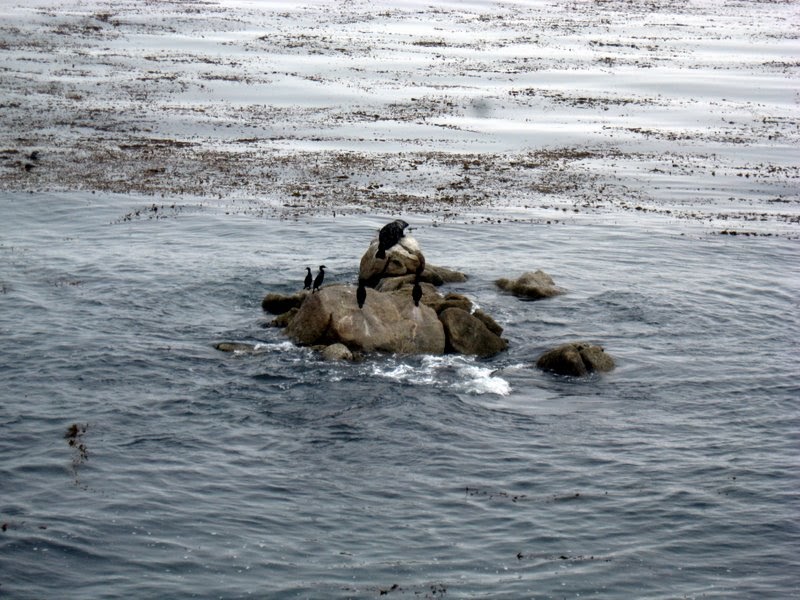
Nature, not man, has created a masterpiece. Unrelenting surf pounded the shores of these cliffs for thousands of years to create shallow, sheltered coves and tide pools that cormorants, pelicans, sea otters and sea lions call home. On land, 88 species of mammals, including mountain lions, bobcats, fox and coyote roam the 1,250 -acre reserve while hundreds of bird species fly overhead.
The wind-sculpted trees with their tatters of lacy lichen clinging to their nude branches create an eerie, almost surreal feeling as we walk the Cypress Grove Trail. We wouldn't have been surprised if leprechauns had jumped out from behind a boulder because this is a trail where you expect magic to happen.
While we never spotted the sea lions from the trail named for them (Sea Lion Point Trail), we enjoyed a completely opposite experience on this windswept plain where the ocean breezes fan this treeless expanse of garden. These meadows were as exposed as the cypress grove was secretive, and we're told that dozens of wild plants run rampant here during the summer.

A couple volunteers at the ranger station answered our questions about the animals, sea creatures, and the lichen growing on the trees. David and I felt the sea otter's pelt (Pelts were displayed from animals that had died naturally.) and learned that, unlike the sea lion and seal that are protected from the cold by a layer of blubber, the otter fends off the cold by having the densest fur of any animal on Earth.

As we drove away, we realized that even though Lobos Point was lacking some crucial funding at the moment, the park was wealthy beyond measure in its treasures. Pebble Beach Resort might have every amenity to please the body, but Lobos Point soothed the soul.

Practicalities -
The park opens at 8 A.M. and closes a half hour after sunset. It is wise to get there early as only 450 visitors are allowed in the park at one time. Admission is $10 per car. Click for more information about the park.

Wednesday, December 1, 2010

California Dreamin' - Monterey's 17-Mile Drive

If there's an ugly spot on the Monterey Peninsula, David and I never saw it. One breathtaking view is followed by another, and that's especially true on the 17-Mile Drive.

We almost didn't take the route. It cost $9.50 per car, and we weren't sure it was worth the money since we were fairly certain we'd seen most of the beauty already. We were wrong. It took us four hours to drive the short circuit because we stopped so often for photographs.

By late afternoon, when we were ravenous, we discovered the Pebble Beach Resort where the Pebble Beach Market offers deli sandwiches for reasonable rates. We shared one of their hefty sandwiches, sat on the benches in the lodge area, and read about the Monterey Cypress which is native to only two areas along the drive—Point Lobos and Cypress Point. We're glad we didn't miss it!

The Lone Cypress
Practicalities - It's easy to find the entrances to the Drive which runs from Carmel to Pacific Grove.  For more information, including free scenic alternatives, click here.

Tuesday, November 2, 2010

California Dreamin' - Santa Cruzin'


 San Francisco's Siren song kept David and me enthralled for days, but we had a birthday to celebrate in Santa Cruz and more scenic delights waiting down the road.  It was time to move on.
Our friend, Bonnie, is a textile artist who is currently on display at the Museum of Art & History in Santa Cruz.  She gave us a tour of her charming beach-cottage-turned-permanent-residence just a block from the sea, led us on a tour of the beaches and the eclectic downtown area, and showed us her work on display in the museum. 

If only we'd had more time, we would have loved to explore some of the county's fourteen state parks or the boardwalk bordering the sea, but we wanted to celebrate Bonnie's birthday, so we headed to an oceanfront restaurant.

It was a good choice. There's nothing better than excellent food, good companionship, and a perfect sunset to end the day.

Practicalities -
Click for more information about Santa Cruz or the Museum of Art & History.

Monday, November 1, 2010

California Dreamin' - On to Monterey

MSNBC says Monterey Bay Aquarium is, “one of the most enchanting aquariums in the world;” Coastal Living lists it number two on their USA list; and the Parents website ranks it number one for children, so David and I were anxious to see what all the fuss was about.

View through aquarium window
We love our Birch Aquarium in San Diego, but after four hours in Monterey's gem, we can understand why Monterey Bay Aquarium received such effusive reviews and high rankings.

Vacation Rental Apartment Advantages

David's and my casa rental in San Miguel de Allende
Steven James Snyder describes his experience renting a vacation apartment in Paris in this Time magazine piece.
                                 ******************
For most travelers, hotels mean security and reliability—a standard level of service when sleeping away from home. But they can also be dull or cheesy, as far removed from an authentic local experience as your house is from the nearest tourist trap. They tend to be expensive too, all of which explains why my wife and I steered clear of hotels near the Louvre or the Champs Elysées when we planned our September trip to Paris. We didn't want to be surrounded by American chain restaurants, souvenir vendors and a constant parade of tour buses.

Instead, we searched the Web for vacation rentals, eventually zeroing in on a ground-floor apartment in the Marais neighborhood that charged half as much as a boutique hotel two blocks away. We asked questions about the property via e-mail and used PayPal to make a deposit. Two months later, at 10 p.m. on a misty Monday, we emerged from the Breguet-Sabin Métro stop and started wheeling our luggage down empty streets. With no cell-phone coverage and only a street map to guide us, we were more than a little nervous: Would the owner be there to hand off the keys? Would the apartment look as advertised? Would the address even exist?

Sunday, October 31, 2010

California Dreamin' - Haight-Ashbury

Did you miss the psychedelic 60s, the era when the American Way of Life that focused on greedy materialism and hypocrisy (especially sexual hypocrisy) was rejected by disenchanted young people in America? When hundreds thronged to the Haight-Ashbury section of San Francisco to experiment with sex, drugs and rock and roll in an attempt to reform the prevailing culture. The place where Flower Power was thought to be the antidote to war, and love-ins promoting sexual freedom played out against a background of peace symbols, water pipes, and love beads.


If you missed that exciting era which revolutionized the world and gave us women's (and men's) liberation, civil rights, sexual freedom and the end of the Vietnam War, reminders of that provocative period in America's history are still very much in evidence. You won't hear “Lucy in the Sky with Diamonds” any more as you walk down the streets in Haight-Ashbury, but the Hippie Generation is still there. Alive and well.

Smoke shops are plentiful

The Original Frugal Traveler?

Seth Kugel, the New York Times new frugal traveler columnist, spoke to John Wilcock, one of the very first frugal travelers, about the practicalities of traveling on a limited budget.  This is the article from the New York Times.
                              ******************

A Budget Travel Pioneer on a Time When $5 a Day Was Real (Frugal) Money                                By SETH KUGEL

It was the first handwritten letter I’d received in 5 years. Or maybe 10. Signed by John Wilcock, a man I’d never heard of, and postmarked Ojai, Calif., it was waiting for me when I returned from my São Paulo-to-New York summer trip. Mr. Wilcock wrote that he had been an assistant editor at The Times Travel section back in the 1950s, and had written the first editions of “Mexico on $5 a Day,” “Greece on $5 a Day” and “Japan on $5 a Day” for Arthur Frommer in the 1960s.

By George, I thought. This man was the original Frugal Traveler.

Sure Mr. Frommer himself, author of the seminal “Europe on $5 a Day,” could lay legitimate claim to that title as well. But Europe was one thing. The first-ever budget guidebooks to places like Mexico and Japan? That was some real trailblazing.

Mr. Wilcock, it turned out, did a lot more than scribble about travel: he co-founded The Village Voice in 1955 and wrote a column in it for 10 years; he also edited or wrote for or otherwise assisted countless other alternative and underground newspapers. His “Autobiography and Sex Life of Andy Warhol” was published in 1971 (and re-released in March), and he also was co-founder of Interview Magazine with Warhol.

Now 83 and living in Ojai, Mr. Wilcock is still traveling, and still writing a weekly column on the site he calls his “personal journal,” the Ojai Orange. (It’s also an occasional print publication, with all the archives online.) His autobiography, Manhattan Memories, also came out this year. I spoke with him about frugal travel in the days before there were even backpackers, let alone Internet cafes and Doritos to be found worldwide.

What do you remember best about researching “Mexico on $5 a Day”?